
Those of you who know me know that kind offers to help out in the kitchen from friends and family alike are usually greeted with a quick “no thanks, I’m good.” On the rare occasions that I do accept help, it’s usually because I have injured myself in some way (grated a knuckle on a rasp grater, sliced the tip off a finger, etc.), requiring bandages and sometimes a lot of them. I am a very clumsy person really. However, for most of this year, I have had some help in the kitchen and not the human kind. My husband still has a long commute, and nobody else in this house is volunteering (looking at you, Rusty). My help is Claude, an AI assistant made by Anthropic, and it has quietly changed how dinner happens around here.
I’ve been using AI tools since before most people had heard of ChatGPT, and for a long time I used them like a search engine with better manners. What changed this year is that I connected one to the place where my kitchen actually lives.
The kitchen lives in Notion
If you’ve never gone down the Notion rabbit hole, it’s an app that lets you build your own databases. Mine have gotten out of hand, in the best way: a recipe database, a meal plan calendar, an inventory of the chest freezer, a wine cellar log, a cocktail list, a pantry inventory, a database of ingredients I love, and, as of last month, a catalog of every cookbook I own.
Claude can read and write to all of it. I used to copy a recipe out of a chat window, paste it into a page, and link it to the right night by hand. Now I say what I want and it does the clerical work: checks whether I already have the recipe, writes it up the way I like, files it, links it to the meal plan, and double-checks itself.
How a Saturday works now
Saturday morning is my meal planning time. I usually wake up at an ungodly hour for a weekend and plan 3 or so meals for the week (I’ve learned that attempting more is a recipe for exhaustion, pun intended).
Claude starts with the freezer. Most of our meat and seafood comes from Crowd Cow and lives in a chest freezer, and the freezer database tracks when everything went in, so the oldest proteins come out first. Then it looks at what’s in season, what’s in the pantry, and what overlaps, so the bunch of herbs I buy for Tuesday gets used again on Thursday instead of dying in the crisper. The grocery list goes straight to my phone, minus the things I always have. We then hit the Proctor Farmers Market and Metropolitan Market, and stock up on groceries to fill out the meal plan. Usually fresh veggies from the farmers market, and specialty items and pantry restock at Met Market.
A real week from September: Tuesday – One-pot lemony rice and beans, spring onions and black cod, adapted from the NYT recipe Baked Rice with White Beans, Leeks and Lemon (Gift Link); Thursday – a modified version of Rick Bayless’s Carne Asada Brava Tacos with the addition of chanterelles; and on Saturday, Sweet Corn Risotto with seared scallops.
Teaching it how I cook
It didn’t start out knowing me. The useful part has been how specific I can get, and that it remembers. A sampling of house rules:
- Not every recipe needs fish sauce. Only when it actually matters.
- Not every recipe needs Kashmiri chili, either. I own guajillo, ancho, chipotle, árbol, Urfa, and Aleppo. Use the right one.
- Never put raw onion into a braising liquid or a casserole base. Sauté your aromatics.
- Weeknights are 30 to 45 minutes and one or two pans, and dinner has to reheat well for a late commuter.
- Save the pasta water. Always.
It’s also become a running notebook of what works. Pickle brine is a kitchen workhorse, useful for marinades, dressings and when you need a little extra something in a sauce. Preserved lemon rind goes in off the heat so it doesn’t turn bitter. A well-oiled stainless pan on high heat will give you salmon skin that shatters.
The side quests
Once the boring stuff was handled, there was room for fun. I’ve been recreating my favorite dishes from El Gaucho in Tacoma at home: the Caesar is done, as well as the baked potato and steak tartare. The latter was featured in a dinner with one of our culinarily minded friends and turned out great! The hot water crust for the oxtail pie which my husband was in charge of, not so much (we saved it – more dirty deets in a future post). Our themed dinners with friends now come with saved menus. There’s a cocktail database with more than thirty recipes, heavy on citrus and low-ABV. And Claude helped me draw up a plan to reorganize 171 bottles of wine across fifteen storage boxes, which is either very useful or a cry for help.
What it doesn’t do
It doesn’t taste anything, and it doesn’t know when I’m too tired to cook. It can be confidently wrong about which recipe is in which cookbook, so I check anything it says came from a book. The picks, the cooking, and the verdicts are mine. (It did help me create the structure of this post with heavy editing and additions.) It’s a sous chef, and a very organized one, but it doesn’t do dishes (That’s my husband’s job. It was in our wedding vows!)
How the Cookbook Year happened
This fall I realized I had three slightly different versions of my cookbook list in Notion, none of them right. One of them thought Sohla El-Waylly’s Start Here was an Indian cookbook. Claude merged them into one library and fixed the mistakes, and I kept photographing shelves until the count hit 82: 80 books and two magazines.
That’s a lot of books to mostly not cook from. I tried to fix that once already, in 2021, and you know how that went. So I asked for something better: a year-long plan to cook one or two recipes from every book, mapped to the seasons, realistic about weeknights, with plenty of room for takeout and for cooking whatever I feel like. I wanted it to have a narrative arc and go somewhere, not just be a checklist.
What came back was five phases: Foundations for the dark months, Citrus & Spice for winter, Spring Green, Summer Table, and Harvest & Hand to close out the year. It works around Thanksgiving at my mom’s cabin, saves the bigger projects for my time off around the holidays, and lives in a tracker where every book gets a status and, eventually, a verdict.
Then I decided that if I was going to write about it, the blog needed some love too. That’s the new look you’re seeing now. Here’s what it looked like before:
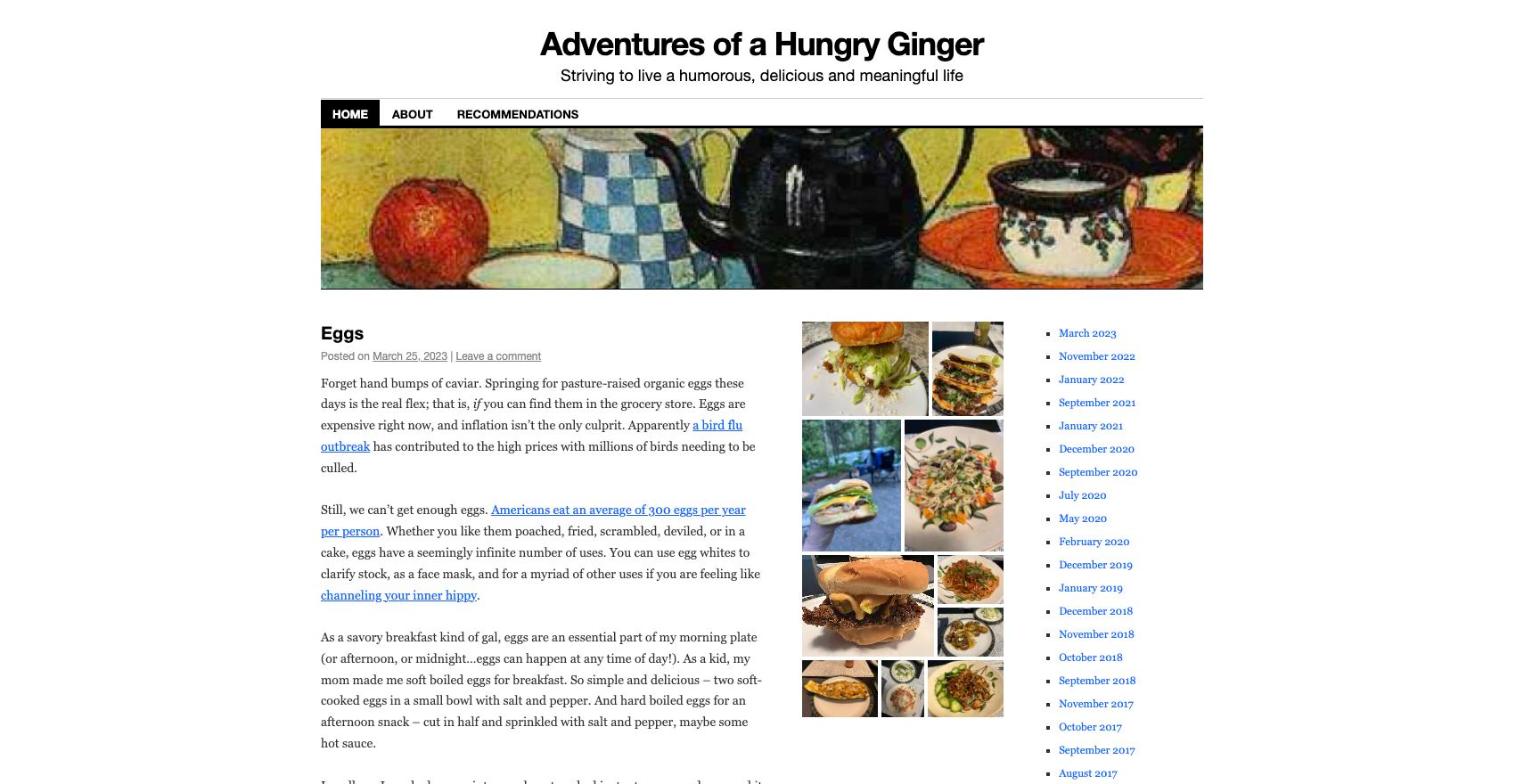
So, credit where it’s due: thank you, Claude, for being the most organized kitchen help I’ve ever had and for spiffing up my retro food blog while preserving my style. Now I’ll go do the actual cooking. Follow along on the Cookbook Year page.


Leave a Reply